
You're mid-answer in an interview. You hear yourself racing, the words stack up, and you can't find the brake.
What is a good speaking rate for interviews and meetings?
Aim for 130 to 160 words a minute when you're making a point to a room or across a table. That sits inside the 100 to 165 range that Microsoft's Speaker Coach recommends (opens in a new tab), based on what audiences it tested found easiest to follow.
Everyday chat is often quoted at about 150, but measured rates can run higher. One study of phone conversations found topic averages from 152 to nearly 170, and 196 when it divided all words by elapsed time.
Here's the limit of that number. No single official figure exists. Published numbers differ by topic, setting, how the words are counted, and whether people are reading aloud or talking freely.
So treat 130 to 160 as a range, not a rule. We stand behind the range, not any decimal inside it.
The arithmetic helps. At 150 words a minute you say 2.5 words a second. A 90-second answer to “Tell me about yourself” is about 225 words. If your answer runs 400 words, you aren't giving a longer answer. You're giving a faster one, or a rambling one.
Why do people speed up when it matters?
You speed up because your body reads the moment as a threat and wants it over. Nerves push you to get the words out before anyone can interrupt, so you stop breathing at the ends of sentences. Silence feels like danger, so you fill it.
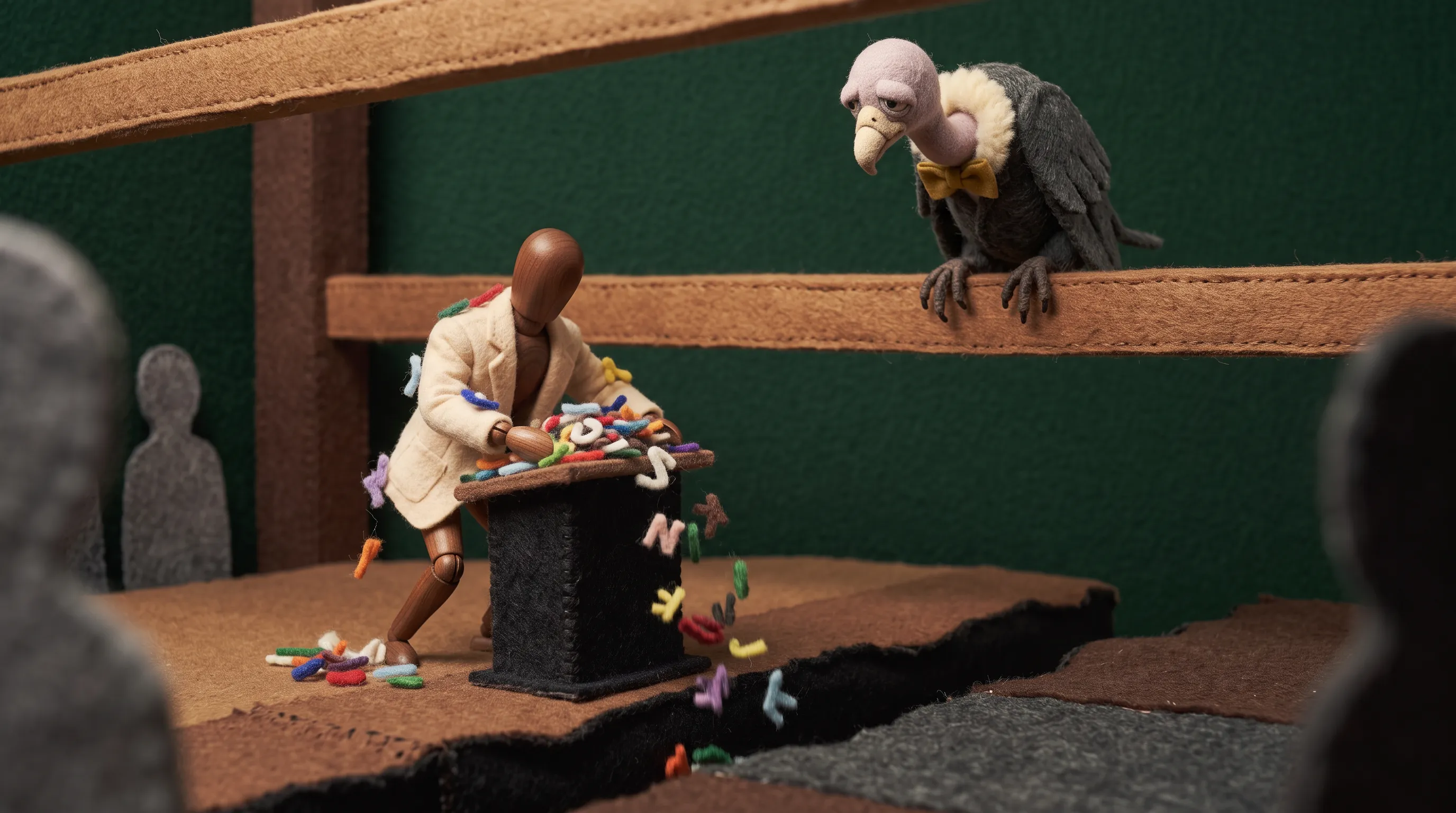
The listener hears the opposite of what you meant. Fast, unbroken speech sounds like worry, even when your content is strong.
Some people have the reverse problem. They drag every word, because they're choosing each one with care.
That sounds like doubt. Both habits are trainable, and neither says anything about how smart you are.
I've played back my own recordings. They're chock full of “ums” and “you knows.”
I've tried YouTube a few times, too. Talk without knowing how to talk, and you need a lot of cuts.
How do I measure my own speaking rate?
Count words and divide by minutes. Talk for one minute about your last work week, write down what you said, count the words, and you have your number. A 60-second sample is rough. Your pace changes with the topic, so test two or three.
The quicker way is the free speaking rate tool, which does the counting for you. Pace is also only one piece of delivery. Where you pause, whether your sentences drop or rise at the end, and how many ums you use change how fast you sound as much as the raw count does.
Thirty seconds of talking will show you all of it on one card.
What to say instead of rushing
You don't fix pace by thinking “slow down.” You fix it by changing where you stop. Pauses do the work, and each of these pairs shows one.
The opening
Wrong way: “Hi, thanks for having me, so I've been in marketing about six years and I started out in agency work and then moved in-house and...”
Right way: “Thanks for having me.” Pause. “I've spent six years in marketing, the last three running campaigns.”
The pause after the first line gives you a breath and tells the listener something is coming.
The hard question
Wrong way: “Well, so, that's a good question, and I think there are a few ways to look at it, and...”
Right way: “Good question.” Pause for two seconds. “The short answer is the timeline.”
Two seconds feels long to you. To the listener it reads as thinking, not stalling.
The number
Instead of
“I was thinking maybe around ninety, but it's flexible, whatever works.”
Say
“My number is ninety thousand.”
This is the one place to go slower than your average, so say it at half speed, then stop talking and let the silence do the rest.
Right way: “My number is ninety thousand.” Then stop talking.
This is the one place to go slower than your average. Say the number at half speed and let the silence do the rest. If you're preparing for this exact moment, the salary script builder gives you the words.
Over-correcting
Wrong way: Stretching every word so the whole answer crawls: “I... led... the... project...”
Right way: Keep your normal pace for the setup and slow down only on the part you want remembered: “We were three weeks late. I cut two features. We shipped on the fourth Friday.”
A steady crawl flattens everything. Contrast between fast and slow is what makes a point stand out.

Common mistakes with speaking pace
- Chasing a number. Hitting 150 on average can hide a fast opening and a slow ending. Check where you speed up, not only how much.
- Copying someone else's pace. A podcast host reads from a script and edits out the breaths. You're talking live. Use your own range.
- Trimming pauses to save time. If your answer is too long, cut sentences. Cutting pauses just makes it dense.
- Fixing pace but not sentence endings. If your voice rises on every statement, a slower pace won't help. Your statements will still sound like questions.
If I could take something back, it's talking too much. At least for me, the more you say, the more likely you are to say the wrong thing.
The rulePause at every period. Your pace will fix itself.
Practice drill: the 60-second read
This takes about five minutes. Do it out loud, standing up if you can.
Repeat all three rounds once more tomorrow. Three passes a day for a week is enough to feel the new pace without counting. Then try it on a real question, out loud, with no script.
Next, run the drill against a live person. The Foundations track starts with a free 60-second scan that plays back your pace, your ums and your pauses. Then the 30 days go sentence by sentence.
[[track:Foundations]]
Start with the free speaking rate tool if you want your number first.